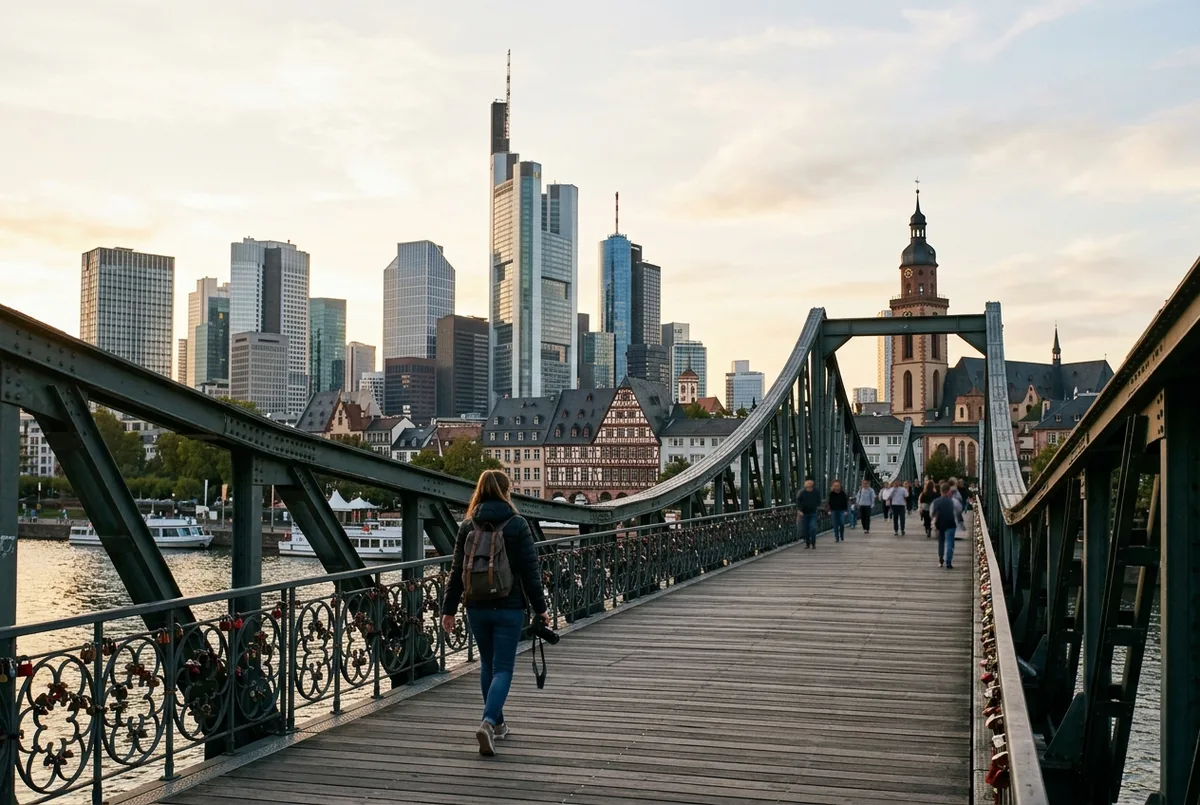
Eiserner Steg is Frankfurt’s most recognizable pedestrian bridge, and it is also the exact spot where the city’s main river cruise departs, which makes the short walk to it worth planning rather than treating as an afterthought. I’d budget about fifteen minutes from the old town if you want to actually look around rather than march straight there. Here’s what I’d tell anyone walking this route for the first time: slow down on the approach from Romerberg, since the view opens up gradually rather than all at once.
How far is it from Romerberg to Eiserner Steg?
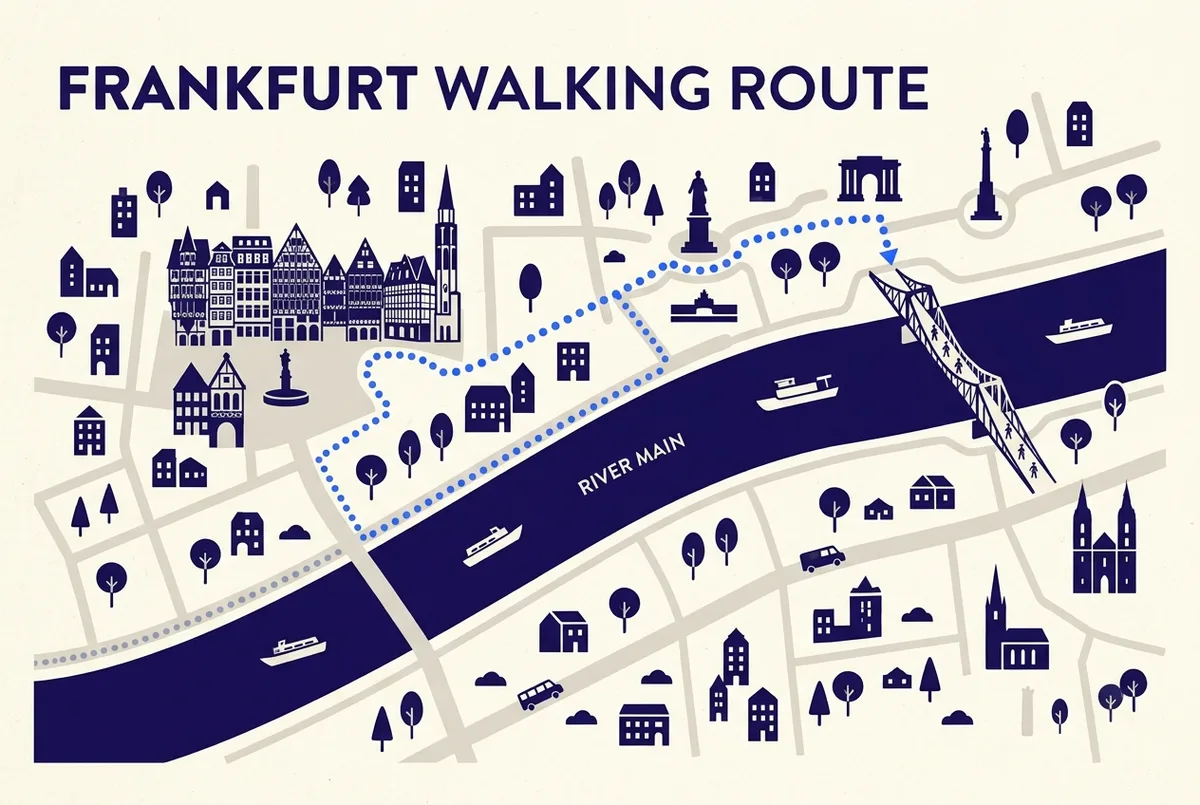
The walk from Romerberg, Frankfurt’s historic old town square, down to the Eiserner Steg takes about five minutes at a normal pace. The route runs gently downhill toward the river along a mix of cobbled lanes and open pavement, with the bridge itself visible well before you reach it.
I’d treat this short stretch as part of the sightseeing rather than just transit. The half-timbered buildings of the reconstructed old town give way to the riverbank almost without warning, and that contrast is genuinely one of the better small moments in central Frankfurt. For the fuller picture of where this stretch of the Main actually goes beyond what you can see on foot, my guide to the River Main’s route through Frankfurt covers it properly.
What does the bridge itself look like, and can you walk across it?
Yes, Eiserner Steg is a pedestrian-only iron footbridge, closed to cars, connecting the old town on the north bank to the Sachsenhausen district on the south bank. It has carried foot traffic across the Main since the 19th century, and the current structure dates from a later rebuild after wartime damage. Locks left behind by couples, similar to those seen on bridges across Europe, still turn up along its railings from time to time.
I’d walk the full length of it at least once regardless of whether you are catching a boat, since the view changes meaningfully depending on which direction you face. Looking downstream gives you the Financial District skyline; looking back toward Romerberg gives you the old town and the Römer city hall instead. If you want to actually photograph either direction properly, I’ve named the exact spots and the best light for each in my guide to photographing the Frankfurt skyline from the Main.
Is the riverbank walk on either side worth doing beyond the bridge?
Both banks have a proper walking path along the water, and I’d pick a direction based on what you want to see rather than assuming one side is simply “the main one.” Heading along the north bank toward the Westhafen takes you past a modern stretch of riverside development with cafes and a more contemporary feel. Heading along the Sachsenhausen side instead takes you past the city’s museum embankment, a strip of several museums facing the river, with the skyline as a backdrop across the water the whole way.
My honest pick for a first visit is the Sachsenhausen side, mostly because you get the better skyline view while walking rather than only once you reach a specific lookout point. If you only have twenty minutes to spare, though, I would not feel bad about just standing on the bridge itself and calling it done.
Where exactly does the river cruise depart from along this walk?
This is the detail that matters most if you are planning to combine the walk with a boat tour. Primus-Linie’s departure point, the operator running Frankfurt’s main scheduled river cruise, is the ticket booth right at the Eiserner Steg landing stage, directly beneath Romerberg. You do not need to walk anywhere beyond the bridge itself to find it, which is part of why I think this walk and the cruise pair so naturally.
I’d arrive at the booth about ten minutes before your chosen departure if you are booking the cruise, since seating is first-come, first-served and the open deck fills up fast in peak season.
Check current availability for the Main River Sightseeing Cruise →
What’s the best time of day to walk this route?
I’d do it twice if your schedule allows: once in daylight to actually see the old town detail and the river clearly, and again closer to sunset for the skyline lit up across the water. The bridge and both riverbanks are lit at night too, so an after-dark walk is genuinely pleasant and safe in this part of the city, though you will obviously lose the daylight detail on the old town buildings behind you.
Weekday mornings are the quietest time if you want the bridge mostly to yourself. Weekend evenings, especially in summer, draw a real crowd of both locals and visitors, which has its own appeal if you like a lively riverside atmosphere rather than a quiet walk.
Where does the name Eiserner Steg actually come from?
Eiserner Steg simply means “iron footbridge” in German, a straightforward description rather than a tribute to any person or event. The original bridge, built in the 19th century, was one of the earlier iron truss structures in the region, and the name stuck through every later rebuild even as the exact materials and design evolved.
I think it’s worth knowing this isn’t a named monument in the way the Römer city hall is. It’s simply “the iron bridge,” which also explains why German speakers refer to it so casually, the way you might say “the footbridge” rather than using a formal title.
What should you pack for this walk?
Nothing unusual, honestly. Comfortable shoes matter more than anything else, since the old town’s cobbled lanes are uneven in places even though the main route to the bridge itself is smooth. I’d bring a light layer regardless of season, since the breeze picks up noticeably once you’re standing over open water, even on a mild day in the streets behind you.
If you’re combining the walk with the river cruise afterward, I would not bring much else. The boat doesn’t sell food or drinks and doesn’t allow outside food either, so eat before you set out rather than planning a snack around the trip.
Is the walk stroller or wheelchair accessible?
Mostly yes. The main route from Romerberg down to the bridge follows paved streets and a gentle slope rather than steps, and the bridge deck itself is flat and wide enough for a stroller or wheelchair without difficulty. Some of the older cobbled lanes in the old town itself are rougher underfoot, so I’d stick to the main pedestrian route rather than cutting through the narrowest medieval alleys if smooth ground matters.
My honest take on walking this route
I would not skip this walk even if you have no interest in boats at all. It is short, free, and shows you the clearest contrast in the whole city between the reconstructed medieval old town and the modern financial skyline, all within about ten minutes on foot. If you are booking the river cruise anyway, treat the walk as the first act rather than just a way to get to the dock.
My actual recommendation for a first morning in Frankfurt is this: start at Romerberg, walk down to the bridge, cross it once each direction, then either carry on along the Sachsenhausen embankment or head straight to the ticket booth if a cruise is next on your list. It is the single most efficient fifteen minutes of sightseeing this city offers.
I’d also say this route works just as well as a closing activity on your last evening as it does as an opening one on your first morning. There’s something fitting about ending a Frankfurt trip the same way you might start it, standing on a plain iron bridge with the old town behind you and a working financial skyline in front of you, which is really the whole story of this city in one view.
Frequently asked questions
Is Eiserner Steg the same bridge where the river cruise departs?
Yes. The Primus-Linie ticket booth sits right at the Eiserner Steg landing stage, so the bridge and the departure point are effectively the same location.
How long does the full walk from Romerberg, across the bridge and along one riverbank take?
Budget twenty to thirty minutes for a relaxed pace covering the approach, the bridge itself, and a short stretch of one riverbank, longer if you stop often for photos.
Can you cycle across Eiserner Steg?
Cyclists do use the bridge alongside pedestrians, though it can get crowded at peak times, so I’d dismount and walk the bike across during busy weekend evenings.
Is the bridge lit up at night?
Yes, the bridge and both riverbanks are lit after dark, making an evening walk a genuinely pleasant option rather than something to avoid.
The bridge’s own history is covered in more depth on its Wikipedia entry, including the wartime damage and later rebuild that gave it its current form.
booking a Frankfurt boat tour from this exact dock →