Sachsenhausen apple wine, known locally as Apfelwein, is Frankfurt’s signature drink, and I think it deserves a proper explanation before you walk into a tavern expecting something like the sweeter cider you might know from elsewhere. It’s tart, low in alcohol, and served with its own specific ritual involving a distinctive jug and glass. Here’s what I’d actually tell a first-timer: order a small glass before committing to a full round, since the sharpness surprises people who expect something closer to sweet cider.
What exactly is Apfelwein, and how is it different from cider elsewhere?
Apfelwein is fermented apple juice, typically around five to six percent alcohol, made from a blend of apple varieties chosen for acidity rather than sweetness. The result is noticeably more tart and dry than commercial ciders most visitors are used to, closer in character to a crisp, sour white wine than a sweet, carbonated drink.
I’d describe the taste honestly: it’s an acquired preference for some people, and genuinely refreshing for others on first try. If you enjoy dry wines or sharp, unsweetened drinks generally, I think you’ll take to it quickly. If you prefer sweeter drinks, I’d ask for it mixed with sparkling water, a completely normal and common way to drink it locally.
How is Apfelwein actually served?
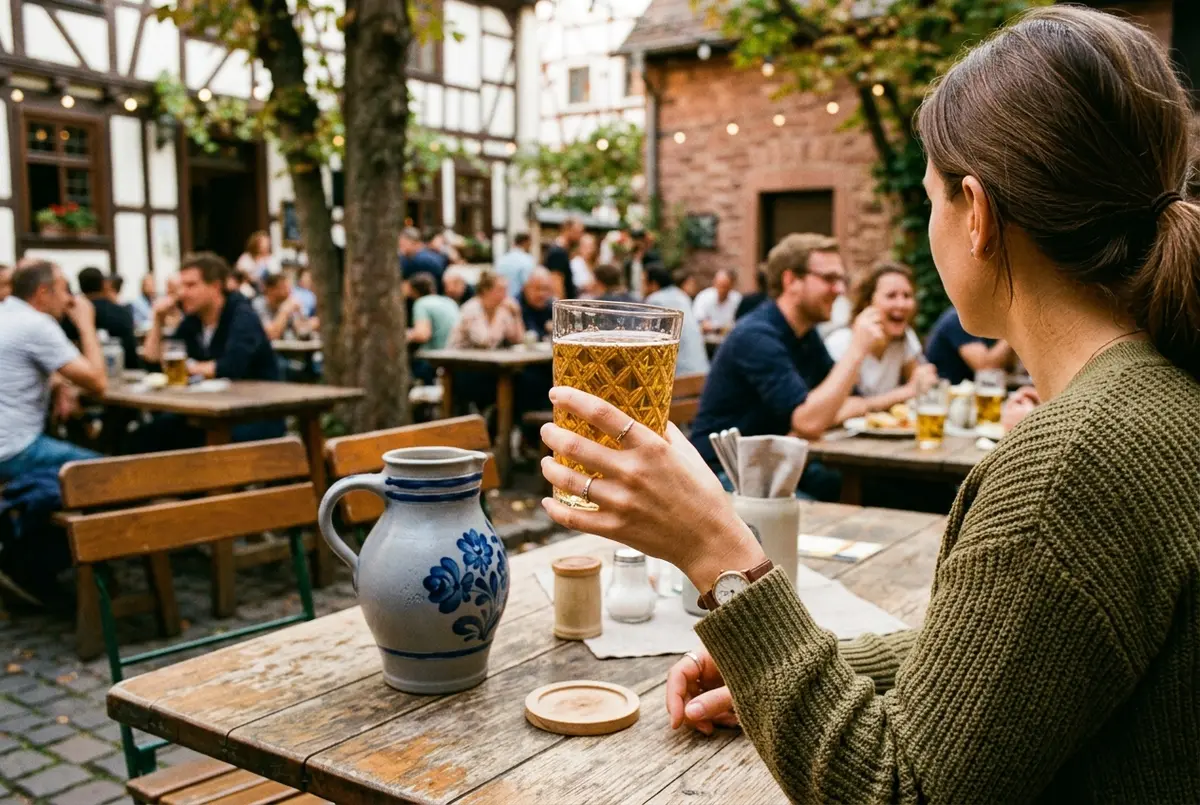
This is where the ritual matters as much as the drink itself. Apfelwein traditionally arrives in a Bembel, a grey stoneware jug with blue hand-painted dots, poured into a Gerippte, a glass with a distinctive diamond-cut pattern. The pattern isn’t just decorative; it was originally designed to keep the glass from slipping out of your hand when it’s wet from condensation.
I’d order it this way at least once even if you end up preferring a single glass afterward, since the Bembel and Gerippte combination is genuinely part of the cultural experience, not just a serving style.
Where do Sachsenhausen’s taverns actually cluster?
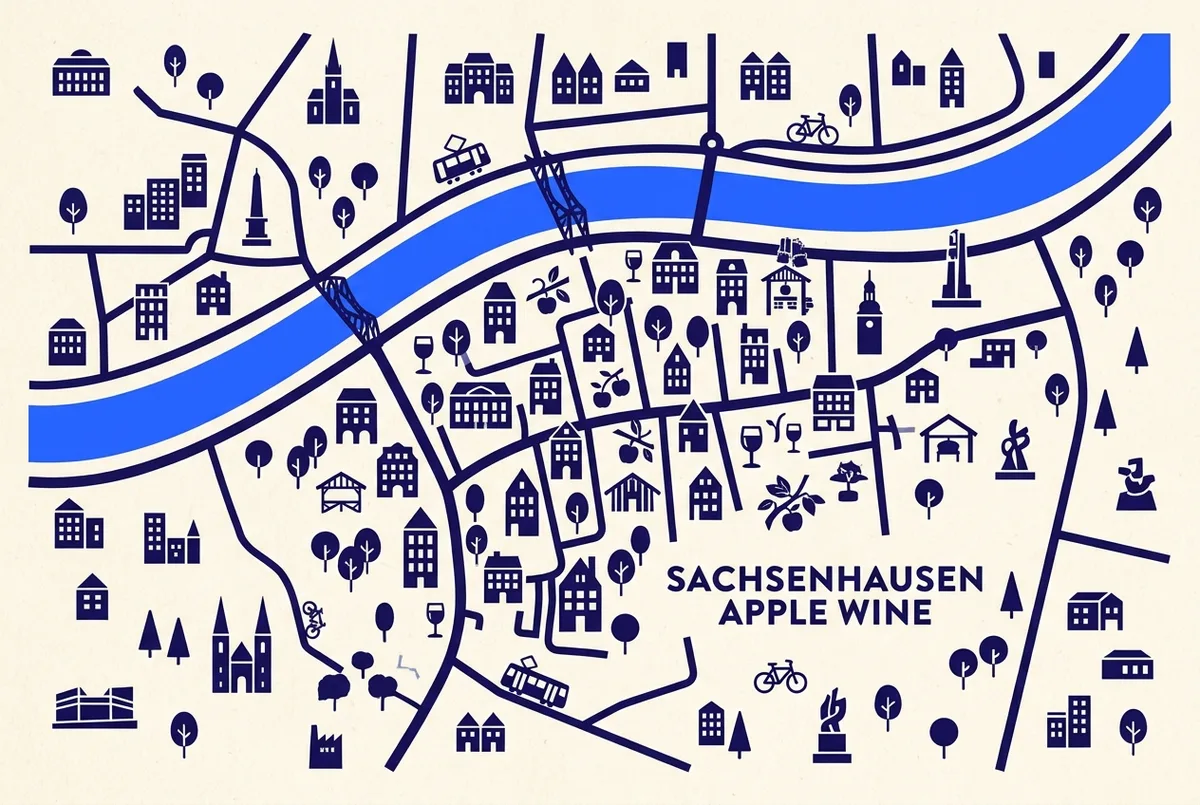
Sachsenhausen, the district on the Main’s south bank, is where this tradition is centered, and the taverns concentrate in a specific pocket of streets rather than being spread evenly across the whole neighborhood. I’d walk in from the Eiserner Steg side, which takes about fifteen to twenty minutes on foot, rather than trying to find a single standout spot from a review site, since the atmosphere of walking between several lit-up, lively tavern fronts is honestly part of the appeal.
What food is traditionally served alongside it?
The classic pairing is Handkäse mit Musik, a marinated, tangy cheese served with onions and caraway, and Frankfurter Grüne Soße, a cold herb sauce over boiled eggs and potatoes. Both are genuinely regional dishes you won’t find as easily outside this part of Germany, which I think makes them worth trying even if the names sound unfamiliar.
I’d pair a heartier dish like Rippchen mit Kraut, smoked pork chops with sauerkraut, if you want something more filling to balance the tartness of the drink. The combination of rich, salty food against the sharp apple wine is really the whole point of the tradition.
Is Apfelwein the same thing as apple cider you’d find elsewhere?
Loosely, yes, but I’d stop short of calling it identical. Both are fermented from apples, but the blend of fruit, the dryness and the serving ritual here are distinct enough that comparing it directly to a commercial cider undersells it. I think of it as its own regional category rather than a German version of something you already know.
If you’re searching for a broader Frankfurt cider tasting experience rather than just a drink at a meal, several taverns and a handful of dedicated tastings let you sample a few different styles side by side, which I’d recommend if you want to understand the range rather than judging the whole tradition from a single glass.
Is there anything else worth doing in Sachsenhausen while you’re there?
Yes, and I’d build a longer visit around it rather than treating the taverns as a standalone stop. Sachsenhausen’s museum embankment, directly across the river from the old town, sits a short walk from the tavern streets and gives you something to do earlier in the day before the evening tavern crowd picks up. I’ve covered the specific attractions within easy walking distance of the dock, the museum row included, in my guide to nearby attractions you can combine with a Frankfurt boat tour.
I’d treat a day that combines the museum embankment, a river cruise and an evening in the tavern streets as close to the ideal single-day itinerary this city offers. Each piece is close enough to the others that you’re never spending more time walking between them than actually enjoying them.
How strong is the tradition, really, and should skeptics bother?
I’ll be honest: if you’ve tried a dry, tart cider before and disliked it, Apfelwein probably won’t convert you on taste alone. But I’d still make the case for going, because the experience is about more than the liquid in the glass. Watching a Bembel get set down on a long wooden table, surrounded by locals who treat this as a completely ordinary Tuesday evening rather than a tourist spectacle, tells you more about Frankfurt’s actual character than almost anything else in the city.
My honest advice for someone who suspects they won’t like the drink is to order it anyway, in the smallest size offered, and treat it as the price of admission to an evening that’s worth having regardless of what’s in your glass.
Does the tradition go beyond Sachsenhausen itself?
Yes, in a loose sense. Apple wine production has roots across the wider Hesse region, and Frankfurt’s own identity is closely tied to it, but Sachsenhausen remains the place where the tradition is most visibly concentrated and most accessible to a first-time visitor. I wouldn’t go looking for it elsewhere in the city; this district is genuinely the center of it.
Should you visit for the drink alone, or combine it with something else?
I’d combine it, honestly. Sachsenhausen sits close enough to the river that pairing an evening there with a river cruise earlier in the day makes for a genuinely well-rounded outing. If you haven’t yet planned the water side of your visit, the hourly Main River Sightseeing Cruise is the easiest way to see the skyline before you head into Sachsenhausen for the evening.
Check current availability for the Main River Sightseeing Cruise →
If what you’re after is the full dining picture rather than just the drink, I’ve covered both realistic meal options near the river, Sachsenhausen’s taverns and the riverside cafes closer to the dock, in my guide to where to eat near the Main river. And if a cafe with a river view fits your plans better than a tavern tonight, my roundup of the best riverside cafes near Eiserner Steg names the specific spots within a short walk of the dock.
What should you know before your first glass?
I’d pace yourself more than you might with a sweeter drink, since the lower sugar content and tart flavor can make it easy to underestimate how much you’ve had. The alcohol content is modest compared with wine, but it’s not negligible either. I’d also avoid ordering a full Bembel on your very first try, since a smaller glass lets you decide whether you want more before you’re committed to a full jug.
My honest take on trying Sachsenhausen’s apple wine
I think this is one of the genuinely authentic experiences left in a city whose skyline has otherwise gone fully modern. The drink itself might not be for everyone, but the ritual around it, the Bembel, the Gerippte, the communal tavern tables, is worth experiencing regardless of whether apple wine becomes your new favorite drink or a one-time curiosity.
My actual recommendation is to go in with low expectations about the taste and high expectations about the atmosphere. Order a small glass, try the Handkäse if you’re feeling adventurous, and give yourself at least an hour to sit at a shared table rather than treating it as a quick stop between other plans.
I’d also say this is one of the easiest traditions to fit into almost any kind of trip. It doesn’t need advance planning, it doesn’t require a big budget, and it works whether you’re traveling solo, as a couple or in a group that’s just spent the afternoon out on the water.
Frequently asked questions
Is Apfelwein alcoholic?
Yes, typically around five to six percent alcohol, similar to a light beer, though the tart flavor can make the alcohol less obvious than in a sweeter drink.
What is a Bembel?
A Bembel is the traditional grey stoneware jug with blue dots used to serve Apfelwein, poured into a diamond-patterned glass called a Gerippte.
Can I order Apfelwein mixed with something sweeter?
Yes, mixing it with sparkling water, sometimes called a Sauergespritzter, is a common and completely normal way to drink it if the straight version feels too sharp.
Is Sachsenhausen only about apple wine, or is there more to see?
There’s more to see, including the museum embankment facing the skyline across the river, but the tavern streets and the apple-wine tradition are genuinely the district’s signature draw for most visitors.
a Frankfurt boat tour that bookends the tasting →